
“A promptEen prompt is de instructie die je aan een AI-model geeft zoals bijvoorbeeld ChatGPT. Het is hoe je communiceert met het systeem: wat je vraagt, hoe je het vraagt en... Meer strategist? A PROMPT STRATEGIST? We don’t need no stinking prompt strategist.” Whether my colleague used those exact words, I’m not entirely sure anymore. But that this was the emotional weight of his message, I remember clearly.
Still, I stood my ground. Because we DO need a prompt strategist. Yeah, and maybe you do too.
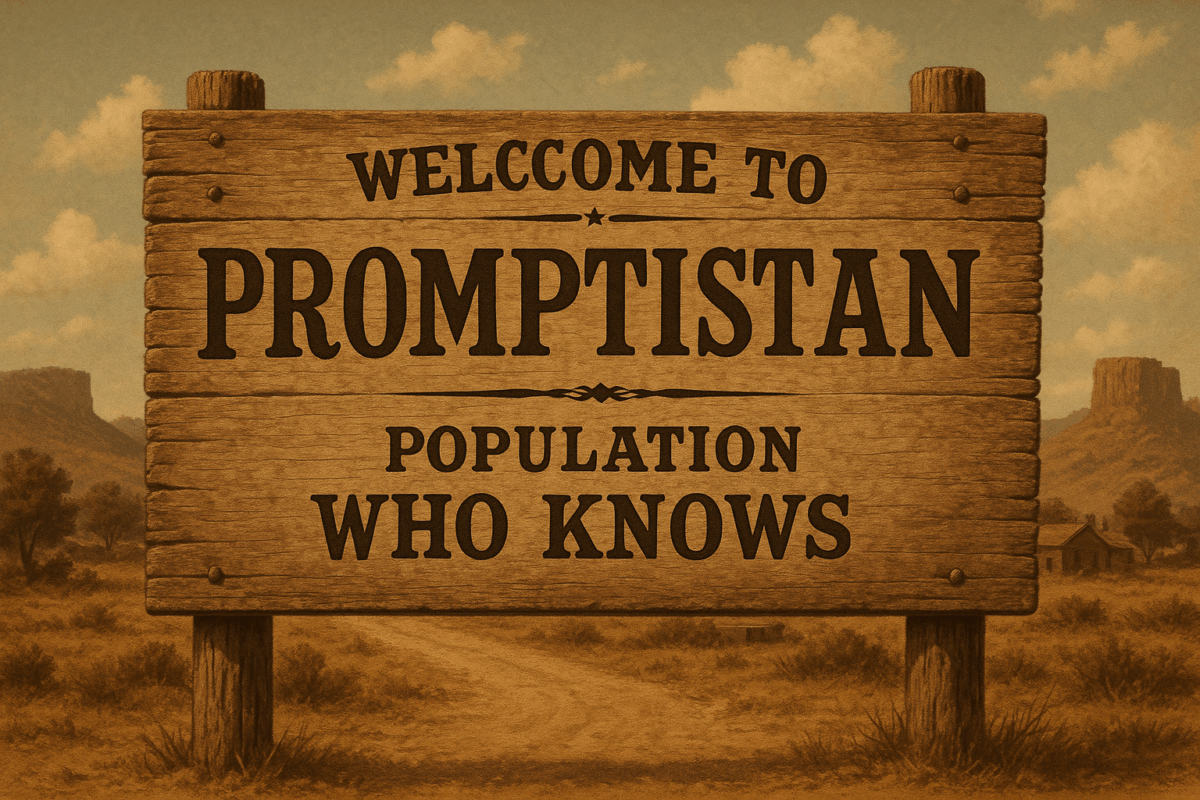
The prompt world in companies: Promptistan
Let’s first take a broad look around us. What does the wild west of Promptistan look like?
Within larger organizations, prompts are conceived, made, used and stored in different places. Sometimes by people who really know their stuff, sometimes by lesser prompt gods, sometimes by people who can’t even spell LLM. All fine, but also not necessarily all that handy.
Because:
- It’s difficult to compare the quality of prompts when everyone has their own methods
- In different places the prompt wheel is being reinvented and that’s a waste of time and effort
- Nobody has insight into which prompts are floating around, how good they are and what risks they carry
- Because we’re dealing with GenAI, the prompts are the means by which you extract tone and style from a GPT. Every deviating content rule in different prompts produces small nuances in tone and style, which added up lead to the deterioration of your brand voice
There needs to be a manager for that
Let’s be honest, you don’t want any of that. Not only because you negatively affect the efficiency of your GenAI deployment, but also because you want insight into what’s happening between human and machine. Not to immediately hand out fines, but because we want to be able to demonstrate that we’re doing the right things, what exactly those things are and because we also (very important) want to protect our own colleagues.
Enter…the prompt manager.
Her role is broad and important. She ensures there’s a central place where prompts are stored. She checks prompts for risks, quality and effectiveness. She contributes to GenAI deployment not only saving time/money in Fantasia, but also in the real world. With prompts that are reusable, smart AND efficient. I like her already.
What does that deliver? Within three weeks everyone knows where the (validated) prompts are, which version is live and what you can/can’t modify. Within three months 60% of teams use library prompts instead of their own hacks. The correction time for AI output drops noticeably and every output also carries a prompt ID, so you can demonstrate what was used if someone asks questions.
Domain-specific prompting
There are of course loads of prompts that can be used by everyone. A summarize prompt for example or a spell-check prompt.
But there are also prompts that are domain-specific. A Risk department needs different (or additional) guardrailsGuardrails zijn beperkingen die je instelt in je prompt om te voorkomen dat een AI ongewenste, onjuiste of riskante output genereert. Guardrails werken als veiligheidsregels in je prompt. Ze vertellen... Meer than an HR department. And where an Instruction in a prompt can be dangerous for a legal team, that same instruction is completely fine for Customer Service.
What those substantive differentiations are, people from the different domains can probably tell you. A generalist on the other hand has more trouble with that. That’s also the reason many of the prompts you can find on the internet almost never work out-of-the-box for you. Your context matters and that’s partly substantive in nature.
So each domain needs to have its own prompt manager. How specific you make that depends on the size of the organization, its structure and potential impact if something goes wrong. Don’t worry, the prompt manager doesn’t need to know the domain like the back of her hand (she doesn’t need to be a lawyer herself, though that could work), but she needs to sit close enough to the domain to catch the important nuances.
Up to this point I still had my colleague with me, by the way. He understood the prompt manager. But I wasn’t done yet.
She has vision and depth
Because then we’re still missing the prompt strategist. That’s a different beast. She’s the one who sets the frameworks, sees the trends, keeps tabs on the LLMs and in general terms ensures that the standards stay up-to-date, the processes workable and the results are fodder for a nice demo or roadshow.
Especially in larger organizations, she’s no luxury. We still don’t seem to realize it enough, but prompts are entities that play a defining role in shaping the voice and message of organizations. They’re not just little requests to ChattyGippy (as my father calls it), but an important and defining part of your GenAI success.
Prompt strategist = prompt manager? That can work!
In smaller organizations this role can perfectly well be a dual role (a prompt manager who’s also a prompt strategist or a content specialist who’s a good prompt manager), by the way. We don’t need to stuff the world full of roles, of course.
Besides safeguarding processes and standards, the prompt strategist is also responsible for the storage of the prompts as owner of the library, the development of that library and keeps a finger on the pulse when the tech bros decide to upend everything in the LLM(s) used. In short: she has the long view, the managers concern themselves with everyday things in Promptistan.
Prompt governance
I’ll still call it Promptistan, because in most organizations it’s still a bit of the wild west. Which is exciting, of course, but not a sustainable situation. That prompts need governance is evident. What that should look like, everyone is still figuring out or…needs to start doing at least.
My colleague and I discussed it for weeks. We actually only stopped when he found another job. That wasn’t because of this discussion, I want to emphasize, but I do miss the sparring.
While I write this, I’m (despite his objections) even more convinced that prompt governance is needed, that roles belong to it and the prompt strategist is one of them. But I invite you to thoroughly contradict me. Then I can sharpen my thoughts even more and I like that.

Don’t stress….it’s just me!
I’ve spent over 25 years working in content strategy and digital transformation, which means I’ve seen enough technology hype cycles to be skeptical and enough genuine innovation to stay curious.
Want to talk shop? Do get in touch!
I have a newsletter and it's bearable. Subscribe to read my (Gen)AI articles!